If you are new to beekeeping, the word “nuc” can sound far more technical than it really is. You might hear experienced beekeepers talking about buying a nuc, moving a nuc, checking a nuc or building one up into a full hive. To somebody just starting out, it can feel like a completely different language.
In simple terms, a nuc — short for nucleus colony — is a small but functioning colony of honey bees. It normally contains a laying queen, worker bees, brood at different stages, food stores and several frames for the bees to live on. Think of it as a smaller version of a full colony, already working together as a unit.
For many new beekeepers, that makes a nuc one of the most practical ways to begin.
A colony that has already started working together
One of the biggest advantages of a nuc is that you are not starting from nothing. The queen is already part of the colony. The workers are already caring for brood, storing food and carrying out the everyday jobs that keep a hive going.
That matters because a honey bee colony is not simply a box full of insects. It is an organised community. The queen, worker bees and developing brood all depend on one another. When you buy a healthy, established nuc, you are getting a small colony that already has that structure in place.
For somebody learning beekeeping, that can make the early stages less daunting. You still need to inspect the bees, understand what you are seeing and learn how to manage them properly, but you have a colony with a working foundation rather than having to create one from separate parts.
What is usually inside a nuc?
A typical nuc will be supplied in a smaller hive box and will normally contain several frames. The exact number can vary, but the important thing is not simply the number of frames. It is what is happening on them.
You would expect to see a mated queen that is laying eggs, brood in different stages of development, worker bees covering the frames, stores of honey or nectar and pollen for feeding the colony.
The brood is particularly important. Eggs, larvae and capped brood show that the queen has been laying and that new bees are developing. A strong nuc should have a healthy balance between brood, food and enough adult bees to care for the colony.
This is why buying bees is very different from buying an ordinary product. You are buying a living colony. It changes from day to day, depending on the weather, forage, the queen and the time of year.
Why not just buy a full hive?
A full established colony can be suitable for some people, but it can also feel like a very big first step. A large colony may contain tens of thousands of bees during the height of the season. For somebody who has never handled bees before, opening a very busy hive can be a lot to take in.
A nuc gives you a smaller colony that can grow as your confidence grows.
It still needs proper care. It can still become strong very quickly when the weather and forage are good. But there is something valuable about watching a smaller colony expand. You learn how brood patterns change, how bees use space and when they are beginning to need more room.
That process teaches you a lot.
How a nuc becomes a full colony
Once your nuc is transferred into a full-sized hive, the bees begin expanding into the extra space. As the queen continues laying, more worker bees emerge. The colony becomes larger and starts drawing or occupying additional comb.
You will need to inspect regularly and make decisions based on what the bees are doing rather than following a rigid calendar.
If the colony is growing quickly, it may need more space. If the weather turns poor, growth may slow. If forage is limited, the colony may need closer monitoring.
This is one of the first important lessons in beekeeping: the bees have not read your schedule.
You can plan, prepare and learn as much as possible, but the colony is influenced by nature. Temperature, rain, local flowers and seasonal changes all affect what happens inside the hive.
The queen matters enormously
The queen is central to the future of a nuc because she is responsible for laying the eggs that become the next generations of bees.
A good laying pattern is one of the things beekeepers look for when assessing a colony. It does not need to look mathematically perfect, but a consistent area of brood can give useful information about how the colony is progressing.
A mated queen also means she has already completed the risky early part of her life and is actively laying.
For a beginner, having a functioning queen already accepted by the colony removes one major uncertainty.
A nuc still needs proper management
It is easy to hear “starter colony” and imagine that a nuc is somehow low maintenance. It is not.
A nuc may be smaller, but the same basic responsibilities apply. You need to inspect it, understand whether the queen is laying, look for signs of disease or pests, make sure the colony has enough food and give it enough space as it develops.
You also need to learn about swarm management.
A strong nuc can grow surprisingly fast. If the colony becomes crowded, the bees may prepare to swarm. That is why regular inspections during the active season are so important.
The aim is not to constantly interfere with the bees. It is to know enough about what is happening to step in when necessary.
The time of year makes a difference
Nucs are usually most useful during the active beekeeping season when colonies can grow and establish themselves.
Spring and early summer can be good times for a colony to expand because there is normally increasing warmth and forage. Later in the season, there may be less time for a small colony to build up before winter.
That does not mean there is one perfect date that applies every year. Weather can change everything. A cold spring can delay colony development, while a warm settled period can speed things up.
A responsible supplier should be thinking about the condition of the bees rather than simply trying to meet a date on a calendar.
Local bees and local conditions
One reason many beekeepers prefer to source bees relatively locally is that the colony will be living in broadly similar conditions.
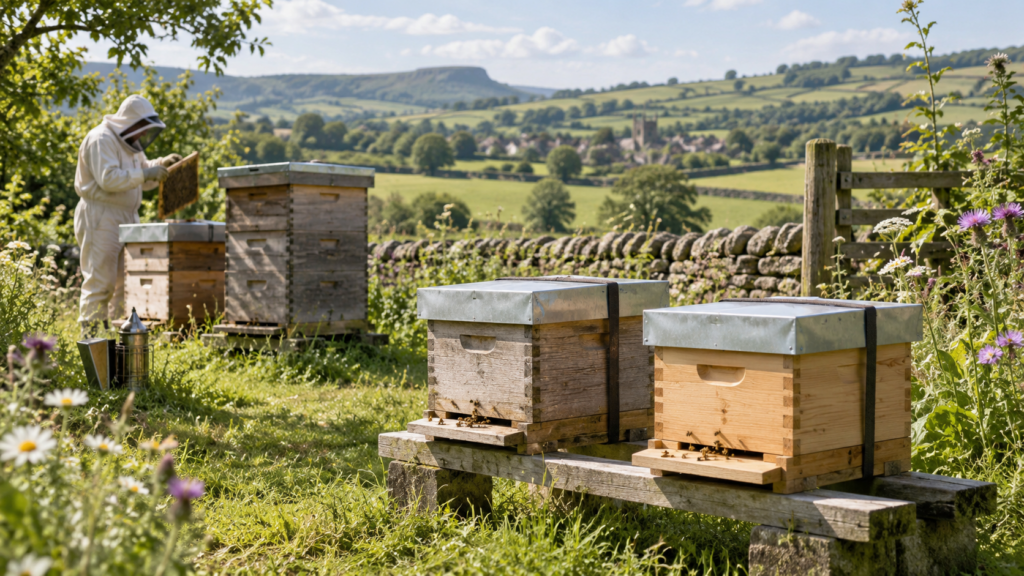
Yorkshire weather is not famous for behaving itself. We can have sunshine, wind and rain in what feels like the same afternoon. Colonies need to cope with local forage and local seasonal patterns.
At Barbu’s Apiary, our approach to beekeeping has always been shaped by observing the bees and working with the conditions around them rather than trying to force nature into a neat timetable.
That is part of the reason we think education matters just as much as the bees themselves.
Is a nuc right for a first-time beekeeper?
For many people, yes — but the bees should not be the first thing you buy.
Before bringing a colony home, you need a suitable location, the right hive equipment, protective clothing and at least a basic understanding of how to inspect a colony safely.
It is also worth learning from experienced beekeepers where possible. Reading books and watching videos can help, but standing beside somebody who can point at a frame and explain exactly what you are looking at is incredibly valuable.
Beekeeping becomes much easier when the things you have read about suddenly make sense in front of you.
What should you ask before buying a nuc?
Do not be afraid to ask questions.
Ask whether the queen is mated and laying. Ask how many frames are included. Ask what type of frames the bees are on so you know whether they are compatible with your equipment. Ask when the colony is likely to be ready and how collection or transfer works.
You should also ask what support is available if you have questions after taking the bees home.
A good nuc should not feel like buying a sealed box and hoping for the best.
A small colony with a big future
The name “nucleus colony” describes it perfectly. It is the nucleus — the starting centre — of what can become a large, thriving colony.
You bring home a smaller group of bees, but inside that box there is already a complete working society. There is a queen laying eggs, workers raising the next generation, bees bringing in pollen and nectar, and thousands of tiny jobs happening every day.
With the right care, that colony can grow dramatically over the season.
And that is one of the most rewarding parts of beekeeping. You do not simply own a hive. You watch a living colony develop.
If you are interested in starting with a nuc from Barbu’s Apiary, get in touch with us to ask about current availability, our waiting list and what you will need before your bees are ready.